


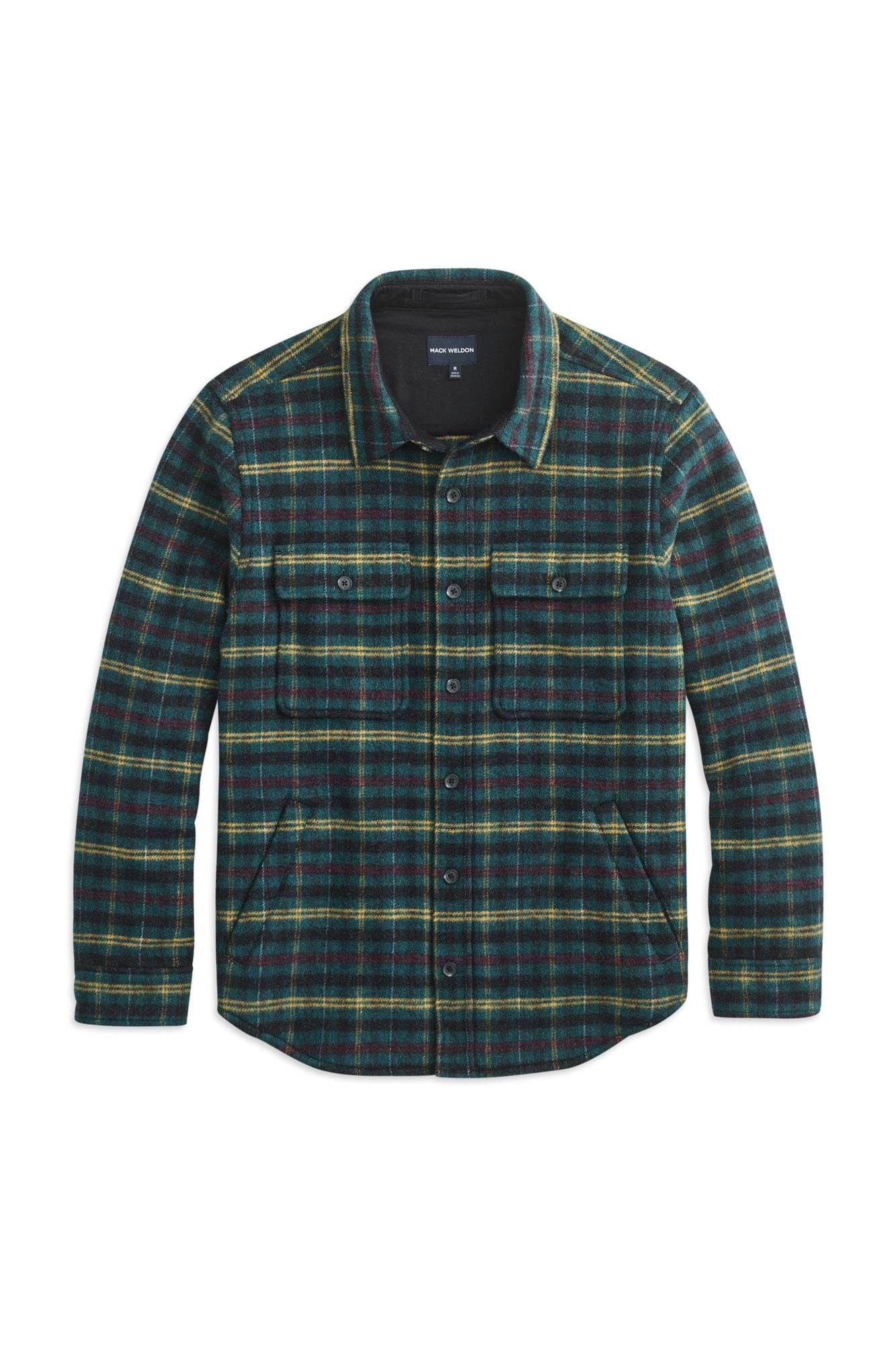
Premium menswear fabrics often get dismissed as a markup on soft hand-feel and a recognizable label. That view misses the point. Real differences between a basic cotton tee and a fine-gauge merino sweater show up in how a garment breathes, stretches, insulates, and holds its shape over repeated wear. Mack Weldon builds much of its range around these functional distinctions, pairing natural fibers like merino wool and lambswool with engineered blends designed for specific performance outcomes.
What Merino Wool Actually Does Beyond Softness
Merino wool earns credit for softness, but its functional role goes further than texture. The fiber naturally wicks moisture, pulling dampness away from the body instead of trapping it against skin. Mack Weldon’s Merino Long Sleeve Sweater Polo is built on a fine-gauge merino knit specifically because that gauge keeps it warm without feeling bulky, and the piece also layers in three different yarns purely for visual texture rather than added warmth. That combination is one clear example of how premium menswear fabrics work on more than one level at once.
Fine-gauge knitting matters because it determines how fabric drapes and how much air passes through it. A looser gauge traps more air and reads bulkier, while a tighter merino gauge can feel substantial without adding visible weight. This is why a merino piece can sit comfortably under a blazer without looking stuffed, a detail the brand highlights directly in its product descriptions.
Lambswool vs. Other Natural Fibers: Breathability and Warmth Myths
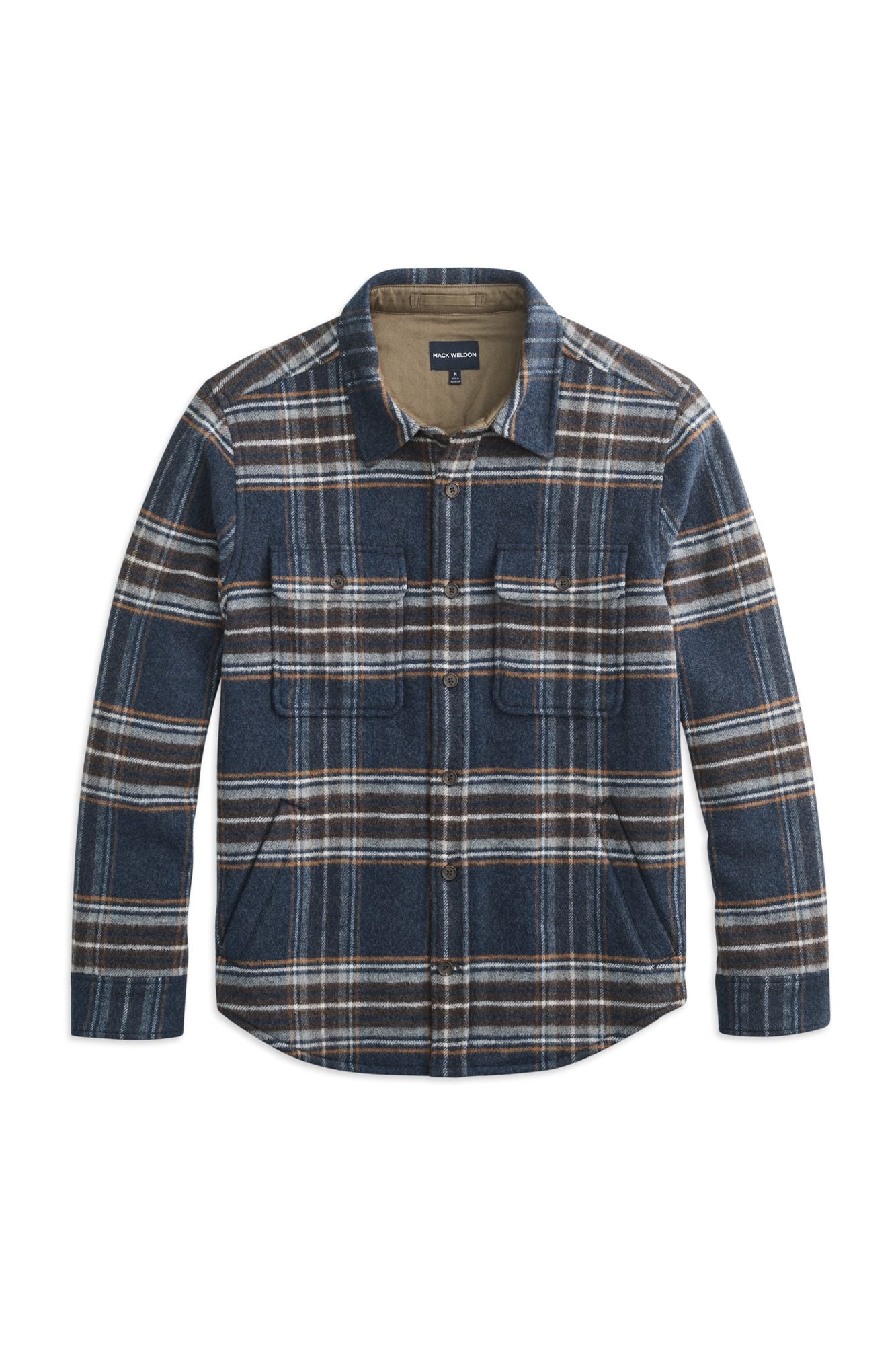
Lambswool is sometimes treated as a cheaper stand-in for merino, but the two fibers serve different purposes. Mack Weldon describes its Lambswool Donegal Crew Neck Sweater as naturally breathable, combining Australian lambswool with multicolored neps to create the flecked Donegal texture. That breathability claim is tied specifically to the lambswool itself, not to any added treatment.
The same approach carries over to the Lambswool Quarter-Zip, built with a lofty jersey stitch for a midweight feel. Both pieces are described as heavy enough for cold weather yet not bulky under a jacket, which speaks to how lambswool can carry warmth without excess layering. In addition, Lycra is plaited into both lambswool knits, a construction detail covered further below.
How Mack Weldon’s Tech Cashmere Hybrid Construction Works
Hybrid fabric construction is one of the more concrete examples of why premium menswear fabrics differ from standard knitwear. The Mack Weldon Tech Cashmere Hoodie pairs a cooling cotton interior with a smooth cashmere exterior. That combination lets the piece work as a standalone hoodie or as a layer underneath a jacket or blazer, according to the brand’s own product description.
This layering flexibility is positioned as a defining trait of the entire Tech Cashmere line, not just the hoodie. The line is built so garments do not require special handling to maintain that dual-surface structure, a point addressed further in the wool care section below. The appeal lies in combining two distinct material behaviors, a cooling cotton interior and a cashmere exterior feel, into a single garment.
The Stretch and Shape-Retention Role of Lycra in Premium Knitwear
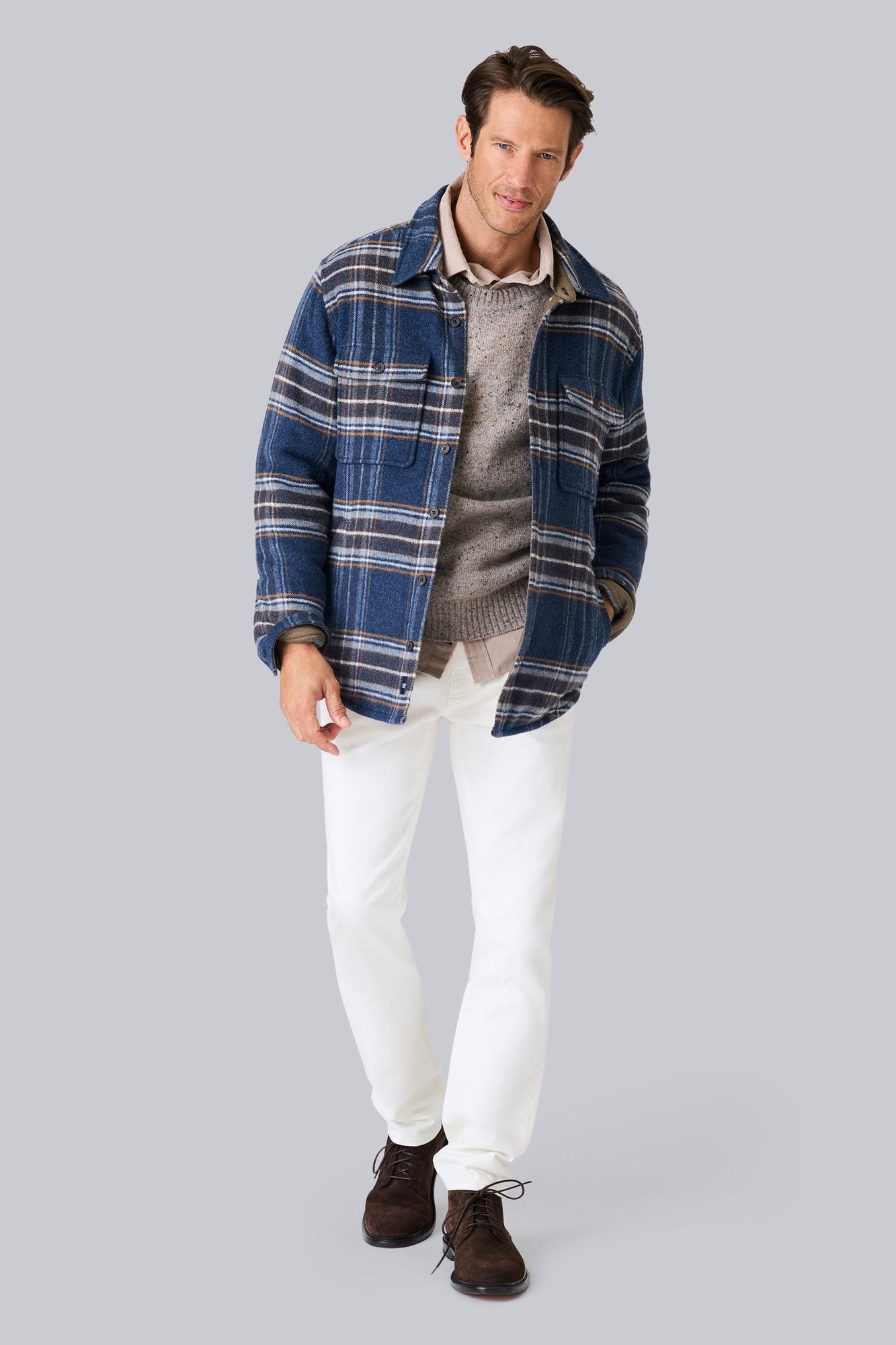
Lycra rarely gets mentioned as a headline fabric, yet it plays a structural role in several Mack Weldon knits. The Lambswool Donegal Crew Neck Sweater is plaited with Lycra specifically to help the garment resist stretching out of shape. The same construction appears in the Lambswool Quarter-Zip, where Lycra is again plaited into the lambswool to prevent sagging.
This is a clear example of a performance material supporting a natural fiber rather than replacing it. Lambswool provides warmth and breathability, while Lycra addresses a separate concern, namely how well the knit holds its original silhouette after repeated wear and washing. Stretch Twill Chinos follow similar logic on the bottoms side, using cotton cavalry twill with added stretch for a more flexible fit.
Common Misconceptions About Wool Care and Durability
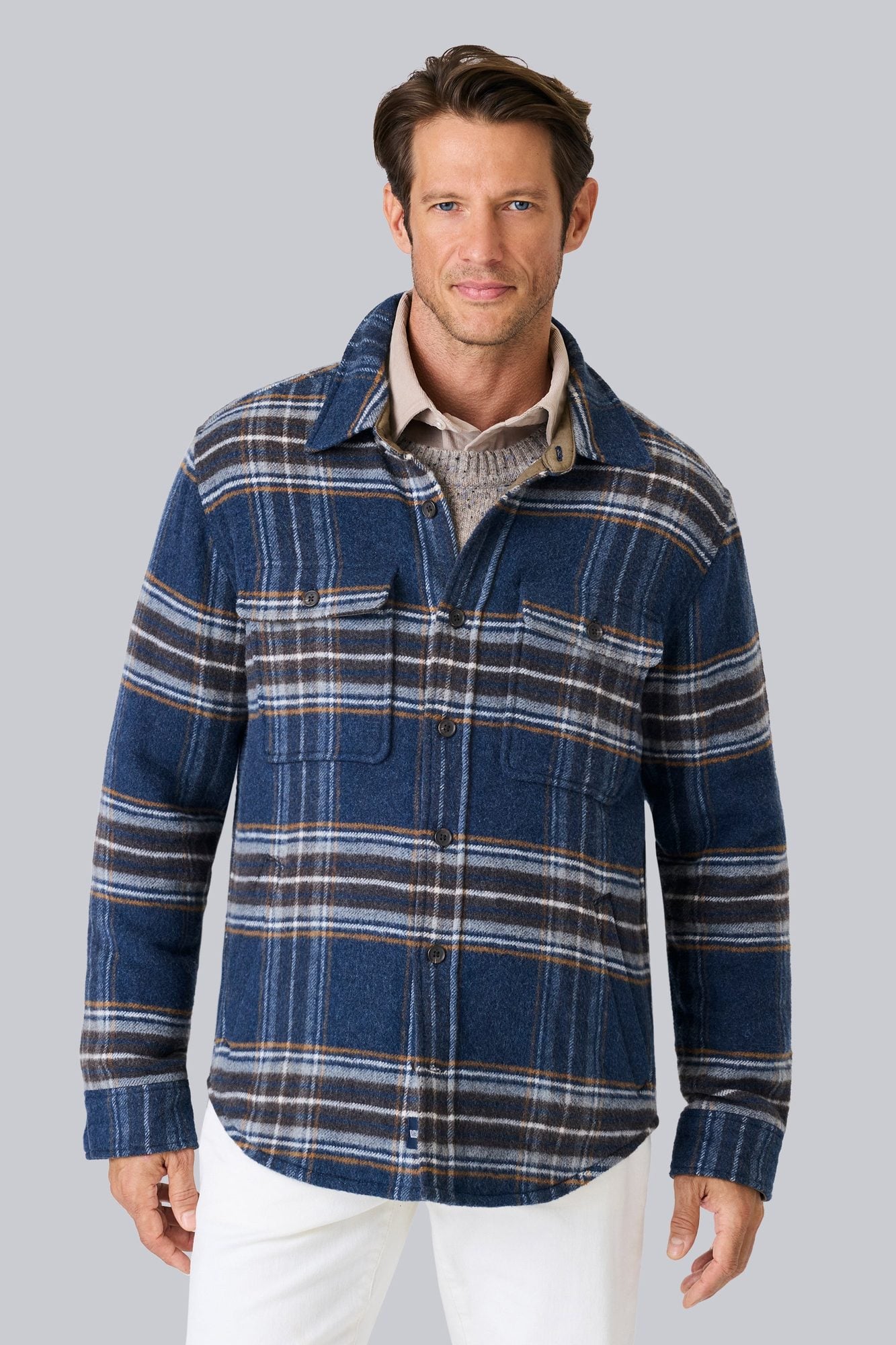
One persistent misconception treats all wool as fragile or high-maintenance. Mack Weldon pushes back on part of that assumption with its Tech Cashmere line, stating that these pieces do not require the kind of careful handling many associate with cashmere. That claim is specific to the Tech Cashmere construction rather than wool garments generally, which is one of several misconceptions about premium menswear fabrics worth separating from fact.
Another misconception assumes thicker fabric automatically means a heavier, stiffer garment. The Merino Fisherman Stitch Cardigan is described by Mack Weldon as looking heavy while feeling light, built with a chunky stitch and a slouchy fit rather than a tight, structured silhouette. That phrasing reflects a specific design goal for one garment, not a general rule for all wool knitwear.
- Softness is often assumed to be the main selling point of premium wool, when moisture-wicking and breathability are equally central to how merino performs.
- Heavier-looking knitwear is sometimes assumed to be hot or stiff, yet a chunky stitch can still read as light depending on construction.
- Lambswool is sometimes treated as inferior to merino, though the two fibers are built around different breathability and warmth characteristics.
- Added stretch fibers like Lycra are often overlooked as filler material, despite playing a direct role in shape retention.
- Cashmere blends are frequently assumed to demand delicate handling across the board, even when specific hybrid constructions are designed to avoid that requirement.
Understanding Weight, Gauge, and Fit in Quality Sweaters and Cardigans
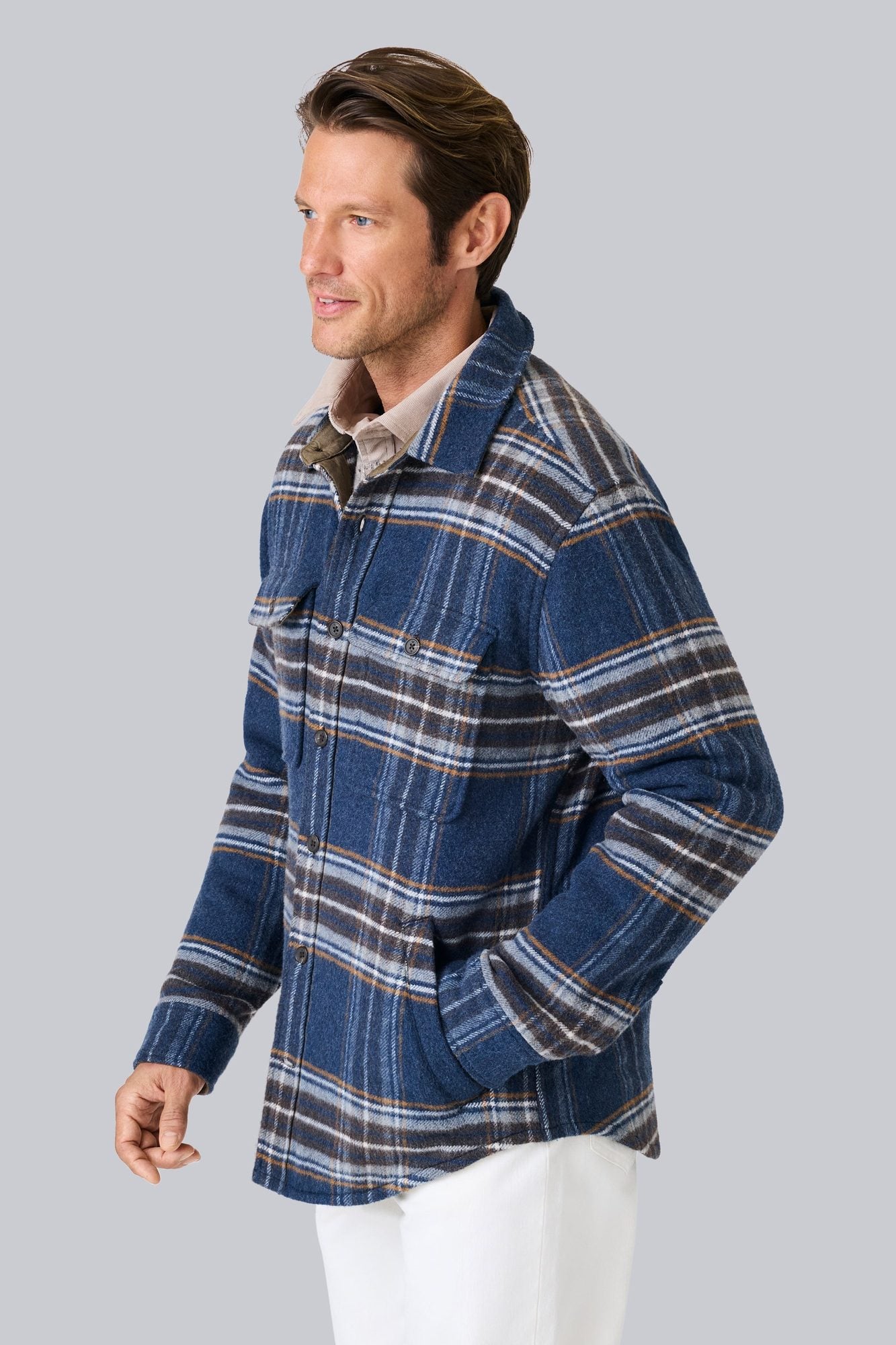
Weight and gauge are two separate properties, and premium menswear fabrics are often judged on both. The Lambswool Donegal Crew Neck is described as midweight, striking a balance between cold-weather protection and wearability under a jacket, while the Lambswool Quarter-Zip relies on a lofty jersey stitch for a similar effect. Fit decisions like these connect directly back to fabric choice, since a finer gauge supports a closer, layerable fit while a chunkier stitch supports a looser, more relaxed drape.
The same weight-and-gauge logic extends past knitwear. The ACE Blazer uses a brushed French terry and a streamlined silhouette, showing that fabric weight shapes tailored pieces as much as sweaters. Across lambswool, merino, and Tech Cashmere pieces, gauge and weight choices shift depending on the intended use of each garment.
Fabric selection in elevated basics is rarely about appearance alone. Fiber type, stitch gauge, and blended materials each contribute something measurable to how a garment performs over time.