


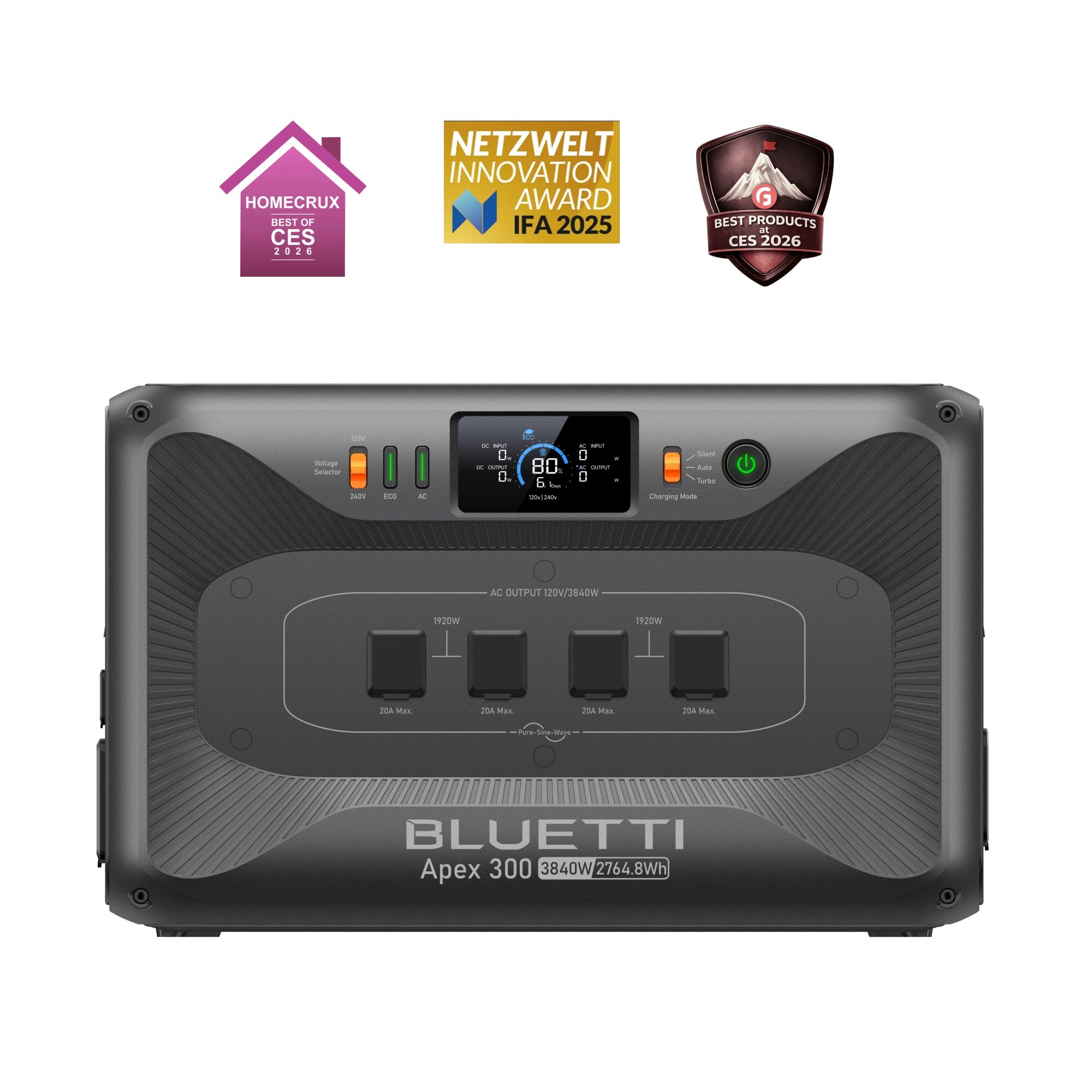
A portable power stations comparison usually starts with one question: should energy stay mobile, or stay fixed as home battery backup? BLUETTI builds for both ends of that spectrum, and the Apex 300, Elite 300, and Elite 400 sit at the center of its lineup. Each model targets a slightly different use case, from van life to whole-house outage coverage. Lining up capacity, output, and expansion paths side by side makes this portable power stations comparison easier to follow.
Understanding BLUETTI’s Two Core Product Categories: Portable Power Stations vs. Home Battery Backup
BLUETTI organizes its range across two overlapping site collections, portable power stations and home battery backup, and some models appear in both. The Elite 300 sits under the portable power station collection, built for mobility and meant to be carried, loaded into a vehicle, or set up at a campsite. The Apex 300 shows up in both listings, which points to a dual-purpose design rather than a fixed category. The Elite 400, on the other hand, is grouped only under home backup, while all three models share LiFePO₄ battery chemistry.
Apex 300: The Versatile Middle Ground with Dual-Voltage Output and Expansion Options
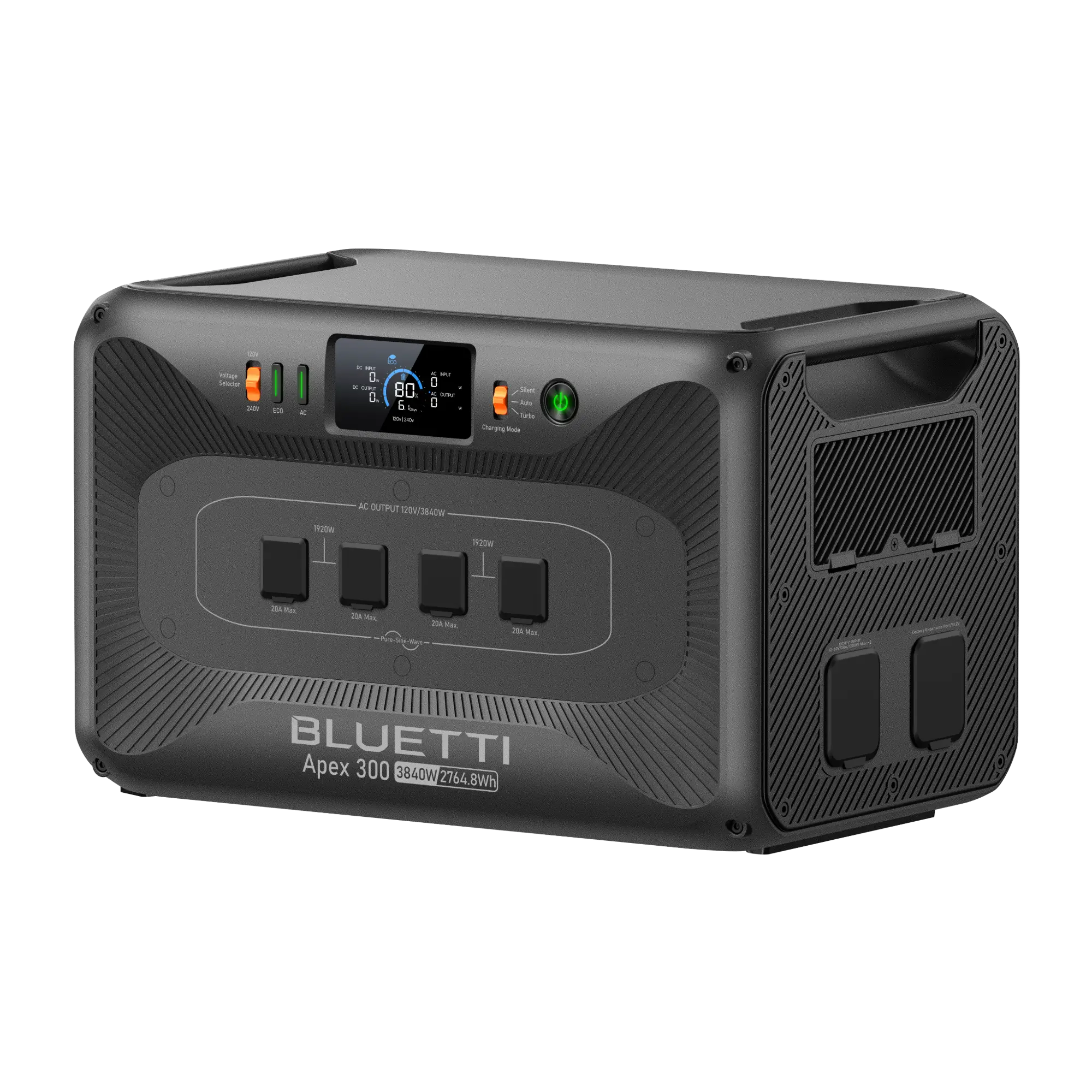
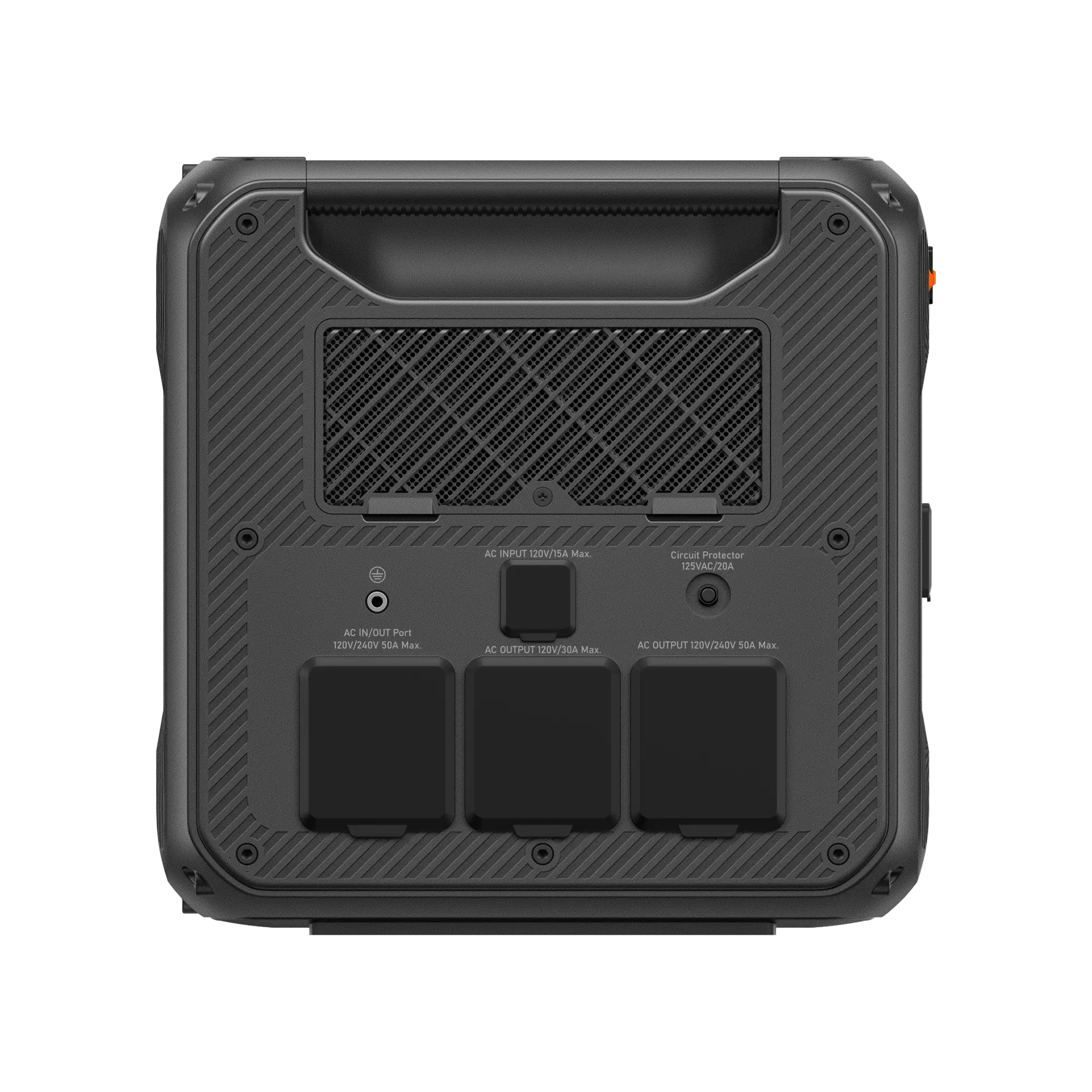
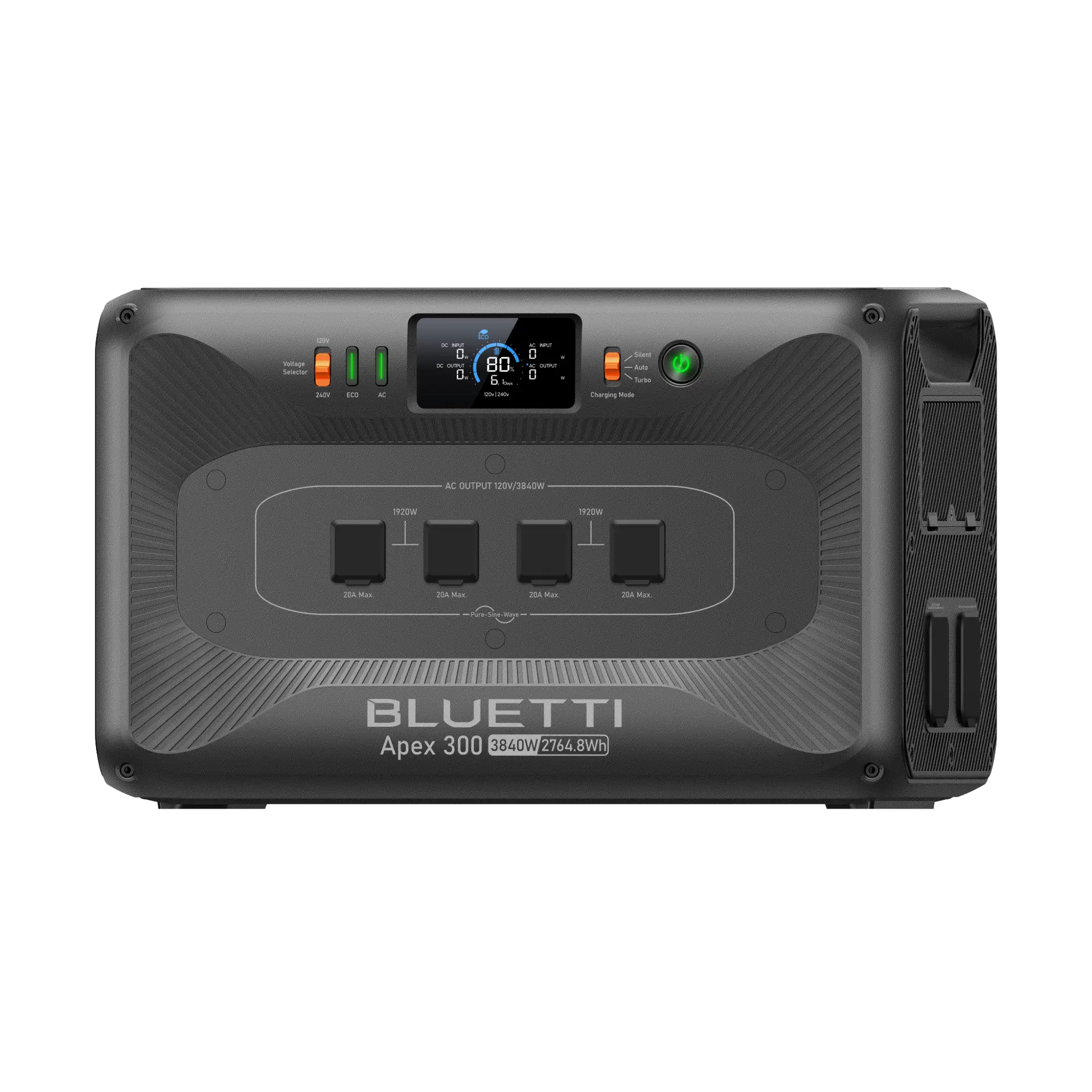
The Apex 300 is built around dual-voltage output, delivering both 120V and 240V power from a single unit, a feature that sets it apart in most portable power stations comparisons. Its base configuration carries a 3,840W output rating paired with a 2,764.8Wh battery capacity on LiFePO₄ cells, and the listing frames it around starting simple and scaling later. That voltage flexibility lets it run higher-draw appliances that typically need 240V service. This dual placement across both home backup and portable listings is part of why BLUETTI positions it as a middle-ground option.
Elite 300: The World’s Smallest 3 kWh Portable Power Station for Compact Mobility
The Elite 300 is described on the brand’s site as the world’s smallest 3 kWh portable power station. Its listing combines a 2,400W output rating with a 3,014Wh LiFePO₄ battery capacity, a pairing the product page emphasizes alongside RV readiness and home reliability. That framing positions it as a unit that can move between a vehicle and a house rather than stay fixed in one place. BLUETTI designed this model for users who need a compact option without sacrificing capacity in tight spaces.
Elite 400: Essential Home Backup with Up to 4 kWh Capacity
The Elite 400 is framed as essential home backup, offering up to 4 kWh of capacity through a fixed 3,840Wh battery and a 2,600W output rating. It ships with wheels and a handle for moving the unit within a home. Unlike the Elite 300, it carries no RV-specific tagline, which points to a narrower focus on stationary use. That focus makes the Elite 400 a straightforward entry for anyone running a single household comparison rather than a mobile setup.
Scalability and Modular Expansion: How Apex 300 Grows from 2.7kWh to 100kWh Systems
The Apex 300 is the only one of the three built for expansion through add-on battery modules, which is a defining trait BLUETTI highlights across its product pages. Pairing it with a B300K module raises capacity to 5,529.6Wh, while a B500K module takes it to 7,884.8Wh. Two B300K modules bring the system to 8,294.4Wh, and the listings also show two Apex 300 units combined with two B300K modules and a Hub A1 reaching 11,059.2Wh at a 7,680W output. That modular path is what separates the Apex 300 from the fixed-capacity Elite 300 and Elite 400 in any detailed portable power stations comparison.
- The Apex 300 outputs 3,840W from a 2,764.8Wh LiFePO₄ battery and supports both 120V and 240V loads.
- The Elite 300 outputs 2,400W from a 3,014Wh LiFePO₄ battery and is marketed as the world’s smallest 3 kWh portable power station.
- The Elite 400 outputs 2,600W from a 3,840Wh LiFePO₄ battery and ships with wheels and a handle for indoor repositioning.
- Only the Apex 300 supports modular battery expansion, scaling from its base 2,764.8Wh up to 11,059.2Wh when paired with additional B300K modules and a Hub A1.
- The Elite 300 is listed for both RV and home use, while the Elite 400 appears solely under home battery backup.
Real-World Use Cases: Choosing Between Portability, Capacity, and Home Integration
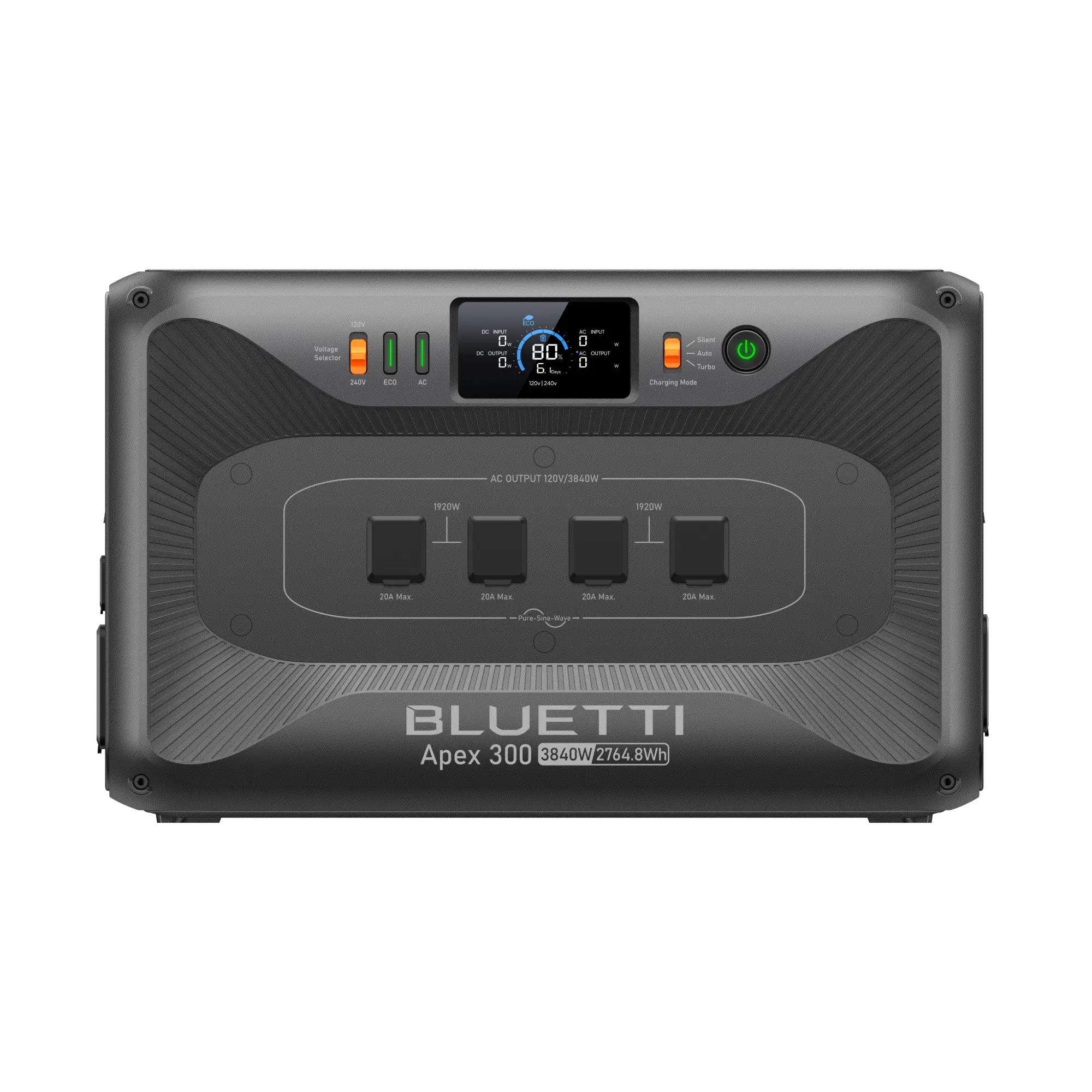
Campers and RV owners working through a portable power stations comparison often weigh the Elite 300 against the Apex 300, since both appear in RV-oriented or dual-use listings. The Elite 300’s compact 3 kWh footprint fits tighter storage spaces inside a van or trailer. The Apex 300’s dual-voltage output and expansion options suit setups that may later need higher capacity without replacing the whole unit. The Elite 400, by contrast, is framed around households wanting dedicated backup without the bulk of expansion hardware.
Those planning a larger whole-home setup are more likely to start with an Apex 300 and add B300K or B500K modules over time. The product pages list configurations reaching as high as 11,059.2Wh, which keeps the Apex 300 central to most comparisons between portable and fixed home power. That configuration range is what distinguishes it from the single fixed-capacity options in the Elite series.
Each path reflects a different starting point. BLUETTI‘s three models serve distinct needs rather than fitting a strict hierarchy, with mobility, raw capacity, and long-term expansion each pulling toward a different choice.