


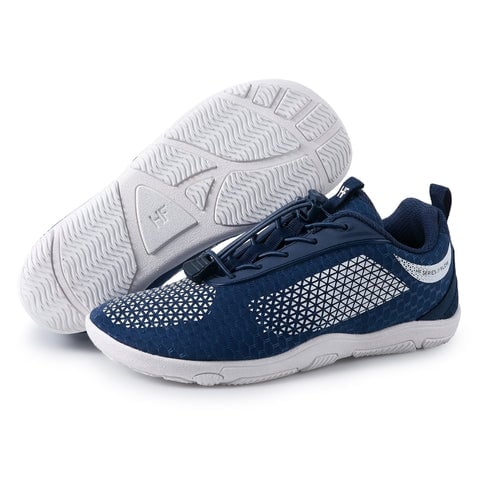
Shoppers searching for affordable barefoot shoes often find the category split between bare-bones minimalist sandals and pricier specialist orthopedic brands. Hike Footwear sits in between, pairing natural-movement features with accessible entry points across several named product lines. This article looks at how that range is built, what design choices define it, and which foot conditions it is meant to address.
What Makes Barefoot Shoes Affordable: The Hike Footwear Approach
Hike Footwear describes its mission as improving foot health while keeping footwear accessible to a wide range of shoppers. The approach rests on three recurring elements, namely a wide toe box, natural alignment, and a zero drop sole, framed as features that support natural movement rather than correct it artificially. The brand states that it has improved over 2m+ lives across its customer base, a figure repeated on its own site.
Instead of positioning barefoot shoes as a niche medical product, the range is framed as everyday footwear suited to walking, work, travel, and casual wear. This framing matters because affordable barefoot shoes are often marketed as a lifestyle upgrade rather than a practical daily purchase. The shipping policy reflects that everyday-use framing too, since standard shipping with tracking comes at no extra cost, while insured delivery is offered as an optional add-on rather than something bundled automatically into every order.
HF Stride and HF Flow: Core Barefoot Options for Daily Wear
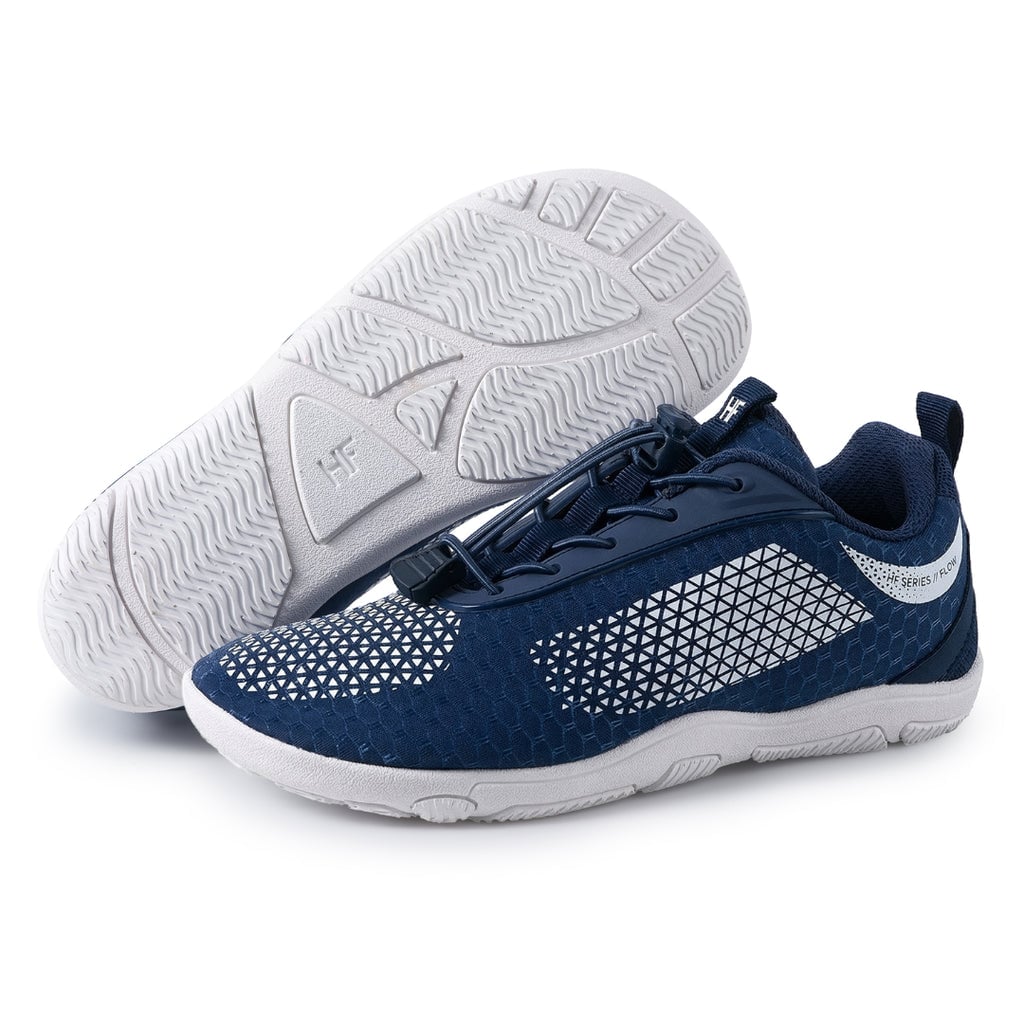
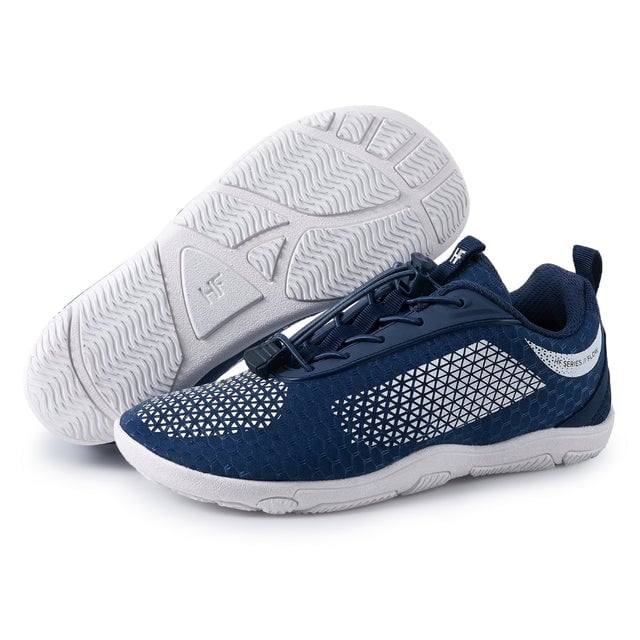
Among the named product lines, HF Stride is described as a hands-free and ergonomic barefoot shoe, while HF Flow is marketed as a minimalistic shoe aimed at foot, knee, and back pain. Both appear among the listed bestsellers. Beyond these two, the catalog also lists Rootsie Grounding Barefoot Shoes, ICONIC EVO, and ICONIC VELCRO, along with seasonal options such as Cozely, a fur-lined style, and Caspar Pro, a non-slip and water-resistant pair.
These lines are presented as daily-wear options rather than occasional or performance-only shoes. HF Stride’s hands-free construction suggests an easy on-and-off design suited to repeated daily use. HF Flow’s stated focus on foot, knee, and back pain situates it within the broader barefoot shoe category, which is generally associated with reduced pressure through natural gait patterns. Hike Footwear groups these names under one collection rather than separate sub-brands.
Wide Toe Box and Zero Drop Sole: The Value-Driven Design Features
The collection pages describe a consistent feature set across the barefoot shoes on offer. These include a wide toe box for stability, a zero drop platform intended to support posture, and lightweight, flexible construction. Breathable upper materials and a durable outsole round out the standard build, details that help explain why affordable barefoot shoes can still carry a consistent spec sheet.
According to the FAQ page, the upper material used across the footwear is premium polyester, chosen for durability and fit. The shoes are built with a minimalist sole and do not include built-in arch support, since the design follows a barefoot philosophy. Optional orthopedic insoles are sold separately for those who want added support layered onto the same base design.
Addressing Foot Pain Without Expensive Orthotics or Specialist Shoes
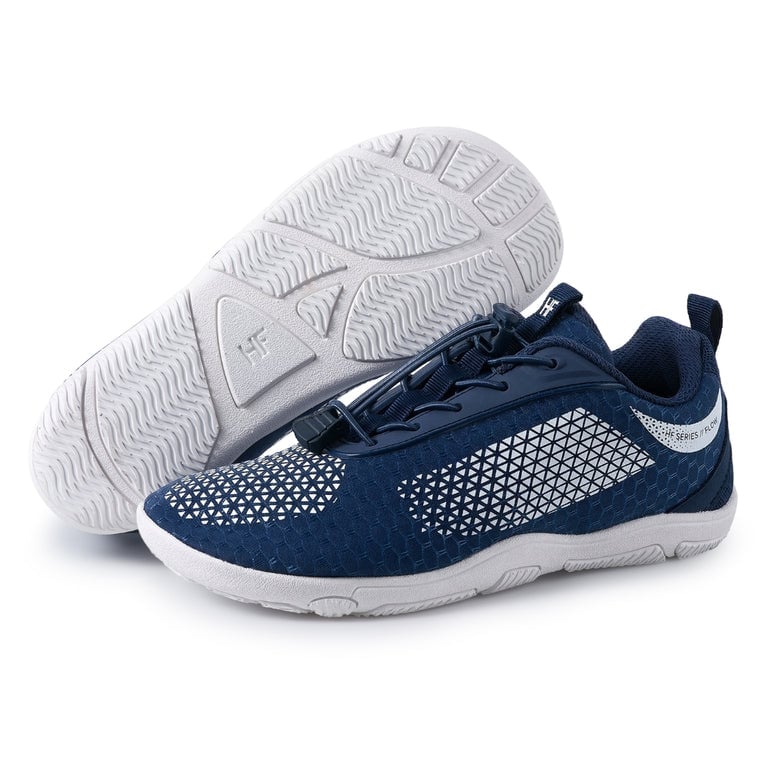
The FAQ page directly addresses several pain-related questions, stating that the shoe construction is intended to support people dealing with neuropathy and plantar fasciitis. For neuropathy, a wide toe box, a non-binding upper, a slip-resistant sole, and a flat, flexible design are named as the relevant features. These features are described as encouraging circulation and reducing pressure on sensitive areas of the foot. Hike Footwear presents these as built into the standard shoe rather than as an add-on kit.
For plantar fasciitis specifically, the ergonomic design is said to reduce pressure on the heel and plantar fascia while supporting proper arch alignment. This is presented as a feature of the standard shoe construction, not a separate specialist product. As a result, the same affordable barefoot shoes line is positioned to serve multiple pain-related needs without requiring a separate orthotic purchase.
- Plantar fasciitis is addressed through a design that reduces heel pressure and supports proper arch alignment during movement.
- Bunions are accommodated by the wide toe box, which allows toes to splay rather than being compressed into a narrow front.
- Flat feet are supported through the zero drop sole and natural alignment features built into the barefoot construction.
- Knee pain is targeted through the zero-drop platform, which is described as helping reduce stress on the knees as posture shifts.
- Back pain is listed among the conditions addressed by HF Flow, which is marketed specifically around foot, knee, and back discomfort.
How Natural Alignment Reduces Long-Term Foot Health Costs
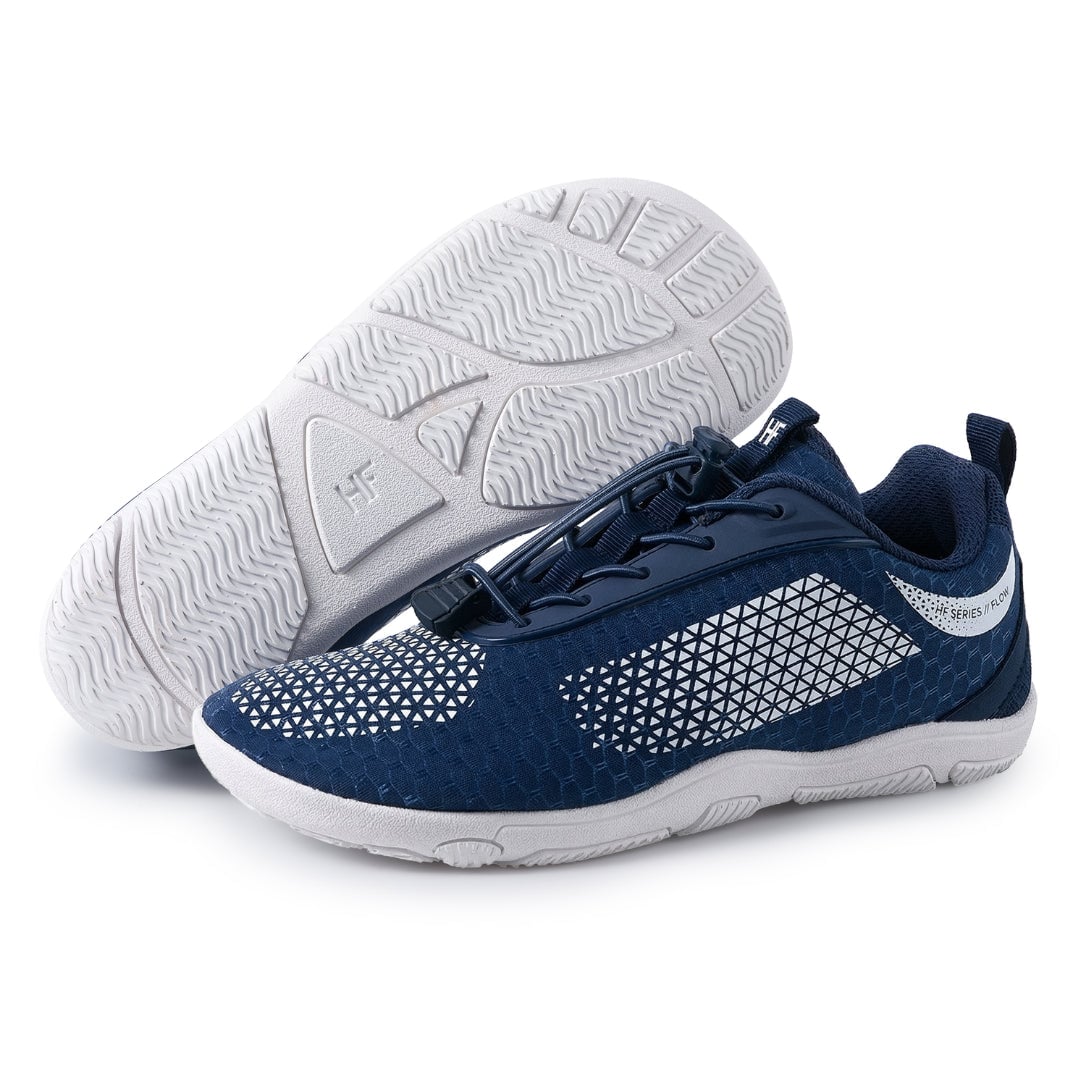
The about page frames natural foot movement as central to the design philosophy, stating that restrictive footwear can work against how feet are meant to function. This distinction separates the barefoot shoes from footwear built around rigid arch support or heavy cushioning. It also ties back to the shoe finder tool on the site, which lets shoppers filter by condition, activity, and category before landing on a specific pair.
The footwear is also described as designed to strengthen foot muscles and improve balance and stability over time, as stated on the brand’s own site. This is offered as a stated design intention rather than a guaranteed outcome. Because the feature set stays consistent across lines like HF Stride, HF Flow, and ICONIC EVO, shoppers comparing affordable barefoot shoes can expect the same core alignment principles regardless of which specific model gets chosen.
Sustainability also factors into the stated mission of Hike Footwear, including eco-friendly materials and carbon-neutral shipping practices. These practices are mentioned alongside the foot health goals rather than as a separate initiative. Together, they round out a broader positioning built around everyday, accessible foot care.
Closing Thought
The range shows that natural-movement footwear can stay practical for everyday life, not just a niche pursuit.